
Abstract
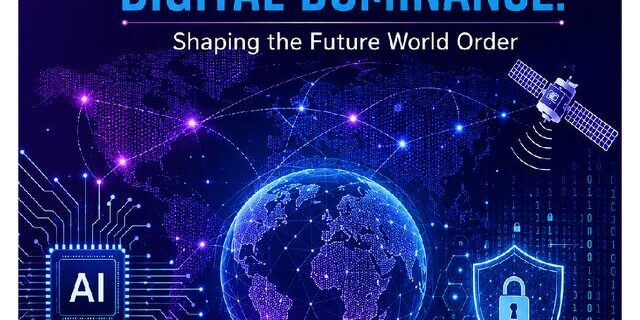
The rapid advancement of Artificial Intelligence (AI) is reshaping the foundations of global politics and international competition. AI is no longer viewed solely as a technological innovation; it has become a critical component of national strength, economic progress, and strategic influence. Governments across the world are allocating significant resources to AI research, digital infrastructure, and defense applications in order to secure competitive advantages in an increasingly technology-driven international environment. This trend has intensified rivalry among states seeking leadership in innovation, data management, and computational capabilities. Through the lens of realist theory, AI can be understood as a modern instrument of power that states employ to safeguard their interests and enhance their security. This study explores the growing connection between AI development and geopolitical competition, evaluates its impact on global power relations, and discusses the challenges associated with regulation and governance. The paper argues that while AI offers remarkable opportunities for development and efficiency, it also contributes to new strategic rivalries that may affect international peace and stability.
- Artificial Intelligence
- Geopolitical Rivalry
- Global Governance
- National Power
- Realism
- Security Studies
- Strategic Competition
Files
Details
- Date
- 2026
- Language
- English
- Related link (publisher page, OPAC…)
- ngmclibrary.in/item/ai-and-geopolitical-competition-a-realist-perspective/
- Collection
- Books & Book Chapters
Cite this item
Sathiya Bama, M. V. (2026). AI and Geopolitical Competition: A Realist Perspective. https://ngmclibrary.in/handle/ngmcl/2026/00021
Sathiya Bama, M. V. “AI and Geopolitical Competition: A Realist Perspective.” , 2026. https://ngmclibrary.in/handle/ngmcl/2026/00021.
Sathiya Bama, M. V. “AI and Geopolitical Competition: A Realist Perspective.” In . 2026. https://ngmclibrary.in/handle/ngmcl/2026/00021.