
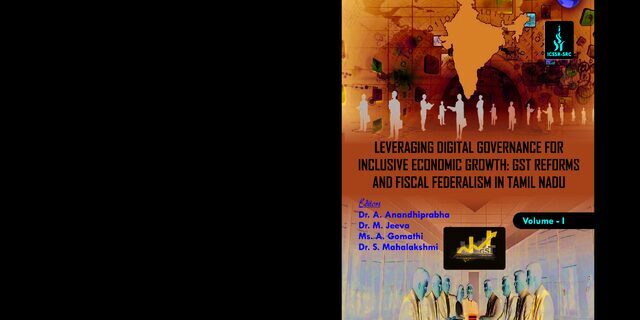
Abstract
Fiscal performance and intergovernmental financial relations (IFR) form the backbone of multi-level governance systems, particularly in federal structures like India, where resource allocation between central, state, and local governments shapes economic stability and public service delivery. Effective IFR addresses vertical imbalances—where subnational spending needs exceed revenue capacities—and horizontal disparities across regions, through mechanisms like tax assignments, grants, and revenue sharing. Amid global economic pressures, including post-pandemic recovery and fiscal federalism reforms, analyzing these dynamics reveals their impact on fiscal discipline, growth, and equity. Intergovernmental fiscal relations encompass revenue mobilization, expenditure assignments, and transfers to ensure efficient public finance. Fiscal performance metrics—such as deficit-to-GDP ratios, debt sustainability, and own-revenue buoyancy—hinge on these relations, as over-reliance on central transfers can erode sub national accountability. Principles like subsidiary (assigning functions to the lowest capable level), fiscal autonomy, and equalization guide optimal designs, fostering macroeconomic stability while enabling regional development.
Files
Details
- Date
- 2026
- Language
- English
- Related link (publisher page, OPAC…)
- ngmclibrary.in/item/leveraging-digital-governance-for-inclusive-economic-growth-gst-reforms-and-fiscal-federalism-in-tamil-nadu/
- Collection
- Conference Papers
Cite this item
Mohana Sundari, T. (2026). Leveraging Digital Governance for Inclusive Economic Growth: GST Reforms and Fiscal Federalism in Tamil Nadu. https://ngmclibrary.in/handle/ngmcl/2026/00114
Mohana Sundari, T. “Leveraging Digital Governance for Inclusive Economic Growth: GST Reforms and Fiscal Federalism in Tamil Nadu.” , 2026. https://ngmclibrary.in/handle/ngmcl/2026/00114.
Mohana Sundari, T. “Leveraging Digital Governance for Inclusive Economic Growth: GST Reforms and Fiscal Federalism in Tamil Nadu.” In . 2026. https://ngmclibrary.in/handle/ngmcl/2026/00114.